
A team comes together when people communicate clearly, trust each other and handle conflict well. Google’s Project Aristotle found that how a team works together mattered more than who was on it, with psychological safety as the top factor. Tuckman’s team stages show that storming, the conflict stage, is a normal step on the way to performing.
A team of strangers. What pulls a team together?
When you play a team sport, it’s pretty obvious. You know your position, you know your job, and everyone’s chasing the same thing – The Win. We’d all love to be picked for that perfect team. But sometimes you get drafted into a team you didn’t choose, and because you want to play, you just get on with it.
That’s exactly how it felt playing in a mixed team at the Pan Pacs this year. When the teams were announced, I knew two of the 14 players and had only ever played alongside one of them. The rest? I didn’t know them from Adam or Eve, for that matter (It was a mixed team after all)
We had three games to sort out our positions for the knockout rounds. The first one was brilliant. We won, which was a minor miracle because the other side had a national player and were ruthless. The mood was jubilant. A bunch of total strangers had come together and pulled off a win.
It felt like we’d cracked it. We hadn’t.

Too many chiefs
Unfortunately, we picked up an injury, and a few players became unavailable, which left us short on the bench. Game two was a loss. By the final whistle, there were a few murmurs about everything that had gone wrong.
Game three, we got flogged. There were a lot of chiefs on the field, and everyone wanted to call the play. Predictably, a few disgruntled arguments broke out afterwards. One teammate was so disgruntled that they refused to come back and play.
If you’ve ever sat through a management course, you might recognise this. Back in 1965, psychologist Bruce Tuckman reviewed around 50 studies of how groups develop and boiled it down to four stages: forming, storming, norming and performing (Tuckman, 1965). Forming is the polite honeymoon.
Storming is where goals get clearer but motivation drops, sub-groups appear, and people start jostling for leadership. We’d had our honeymoon in game one. Games two and three were textbook storming.

What the captain did
Our captain, Andrew (Tyso to all of us), is a very patient man. He listened to every one of those arguments. And not once, during the debrief or later at the bar for the post-game, did he say a negative word about anyone. He just listened.
We had two games left. We lost the semi, which meant one last game for bronze. Must-win.
Before we started, all Tyso said was: “No matter the result, let’s have fun and give it our best shot.” We all nodded and said, “Okay, Tyso.”
That’s exactly what we did. And, surprise surprise, we won.
Tyso didn’t fix our tactics or hand out a new game plan. What he gave us was somewhere it felt safe to play again. When Google studied 180 of its own teams in a research project called Project Aristotle, it found that who was on a team mattered far less than how the team worked together (re:Work). The number one factor was psychological safety, which Harvard professor Amy Edmondson defines as a shared belief that you won’t be punished or humiliated for speaking up, asking questions or making mistakes (Edmondson, 1999).
Our workplaces are no different
As individuals, we apply for jobs we know we’ll be good at. It’s rare to land in a team full of colleagues we’ve worked with before, or under a manager we already love. Our way of working might be completely different from how things are done in the new place.
Every team is a melting pot of egos, work ethics, cultures and personalities, and somehow we need to make it work. The numbers suggest plenty of teams are still stuck in the storming stage:
- 86% of employees and executives blame a lack of collaboration or ineffective communication for workplace failures (Fierce, Inc., 2011).
- 85% of employees deal with conflict at work, and US workers spend an average of 2.8 hours a week on it. That’s roughly a third of a working day, every week, lost to friction (CPP Global Human Capital Report, 2008).
- Only 21% of employees in Australia and New Zealand are engaged at work, down two points on the prior three-year average (Gallup, 2026).
- 50% of Australian employees say they felt a lot of stress the previous day, well above the global average of 40% (Gallup, 2026).
None of that is because people are bad at their jobs. Like my Pan Pacs team, they’re good players who haven’t yet worked out how to play together.
What actually builds the dream team
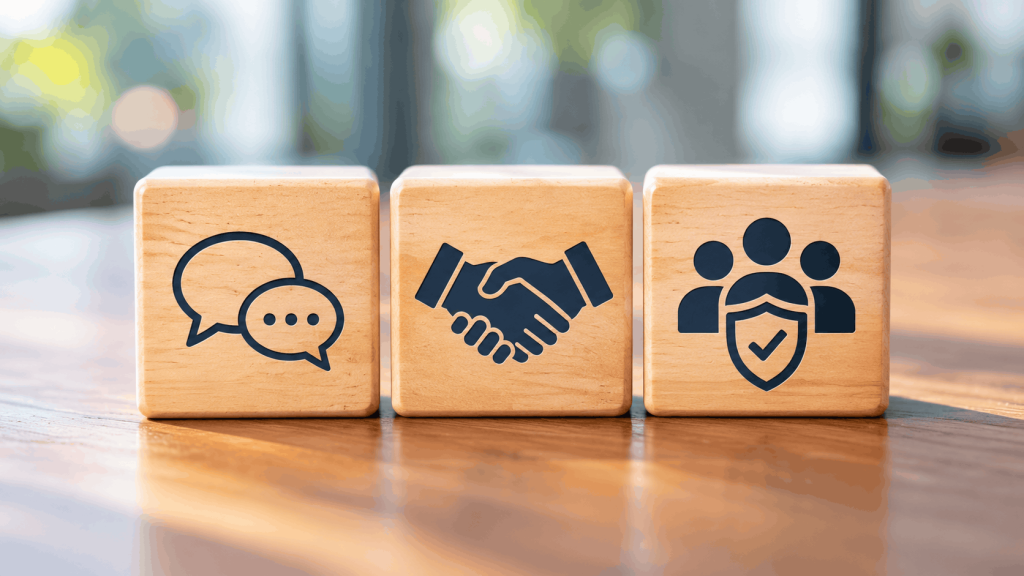
There’s no magic formula, but three things came up again and again, both on the field and in the research.
1. Communication
In game three, everyone was talking, and nobody was listening. Good team communication goes both ways: being clear about roles and expectations, and making sure people actually hear each other. Google’s research put “structure and clarity” in its top five, right alongside psychological safety. When people know their role, fewer chiefs fight over the same play.
2. Trust
Tyso earned our trust by not throwing anyone under the bus. Trust isn’t built in a team-building afternoon. It’s built every time a leader responds to a mistake with curiosity rather than blame, and people learn it’s safe to speak up.
3. Conflict resolution
Conflict isn’t the enemy. Tuckman argued that storming is a necessary stage teams go through on the way to performing. In the CPP study, most US workers said they’d seen something positive come out of workplace conflict, such as a better solution or a better understanding of others. The trouble starts when conflict is ignored or turns personal. That’s how you lose a player who refuses to come back.
Bronze is still a medal
We didn’t become the perfect team at the Pan Pacs. We didn’t need to. We needed a captain who listened, a bit less shouting and permission to enjoy the game again. That was enough to take a bunch of strangers from a flogging to a bronze medal in two games.
Most workplace teams don’t need a complete overhaul either. They need someone to help them move from storming to norming a little quicker, and with fewer people walking off the field.
That’s the bit we love helping with. At Corporate Training Options, our team-building and leadership programs focus on the practical skills behind the scenes, like communication, trust and handling conflict well, so your team can spend less time arguing about the play and more time winning.
Learn more at cto.com.au
Want your team arguing less about the play?
Talk to a CTO specialist about leadership, communication and conflict management training for your team.
Frequently Asked Questions
Corporate training covers structured, employer-funded development, from technical skills like Excel or Power BI through to leadership, customer service, sales and personal development. It applies at every level, not just management, and can be delivered onsite, online or blended.
No. Small and medium Australian businesses make up a large share of CTO’s client base. Training is customised to team size, so a five-person team and a five-hundred-person team both get training matched to their actual gaps.
Most organisations move from a skills audit to a booked session within two to three weeks once prioritisation is decisive. The real risk to timing is indecision, not the training itself, which is why booking early in October matters.
Not necessarily. Many organisations use the final months of the year to address immediate skills gaps, support upcoming projects and prepare teams for a stronger start to the new year. Even a small, targeted program can deliver benefits before year-end while forming part of a broader development plan.
Online training is generally faster to schedule across locations or time zones, suiting a tight timeline well. Onsite still suits hands-on, team-based topics where collaboration matters more than speed, so the right choice depends on what’s being trained.
Clear communication, trust and healthy handling of conflict pull a team together. Google’s Project Aristotle, which studied 180 of its own teams, found that how a team works together mattered more than who was on it, with psychological safety the most important factor. CTO’s leadership and management training builds these team skills.
Psychologist Bruce Tuckman proposed four stages in 1965 after reviewing around 50 studies of how groups develop: forming, storming, norming and performing. Forming is the polite start, storming brings conflict and lower motivation, norming builds cohesion, and in performing, the team’s structure supports the work.
Psychological safety is a shared belief that it is safe to take interpersonal risks in a team, such as speaking up, asking questions or admitting mistakes. Harvard professor Amy Edmondson described the idea in 1999, and Google’s research found it was the most important dynamic in effective teams.
Leaders can listen to concerns without taking sides, respond to mistakes with curiosity rather than blame, and make roles and expectations clear. Those habits support psychological safety and reduce arguments over who calls the play. CTO’s leadership and communication training helps managers build these skills.
No. Tuckman saw storming as a normal stage on the way to performing, and in the 2008 CPP study, most US workers had seen a positive outcome from workplace conflict, such as a better solution or better understanding of others. The problem is conflict that is ignored or turns personal, which is where conflict management training helps.
CTO delivers customised leadership, communication and conflict management training for teams, including Learning to lead, Excellence in Supervision, Building a committed workplace, Coaching for Development, Effective Communication and Conflict Management. Programs run onsite or online and are built around your team’s workplace.
Related reading
• Soft skills aren’t soft: why interpersonal skills decide who gets hired in Australia
• Burnout: a touchy topic for some
• Is your organisation Team Customer or Team Employee? What does the data say?