
Forrester predicts AI agents will influence 75% of B2B purchase decisions by 2027 and expects buyers to talk to people more often to check what AI tells them. That makes questioning, qualifying and clear conversations more important for every sales team. CTO delivers customised sales training across Australia, onsite, online or hybrid, covering the full sales process, phone selling and sales management.
Think about the last time you had to choose a supplier. Where did you start?
Increasingly, buyers start with an AI assistant. According to Forrester research summarised by CustomerThink, 89% of B2B buyers have brought generative AI into how they buy. customerthink
So when your team finally gets the call, the buyer has often done their homework. The question is what your people need to be good at once the conversation starts.
How are buyers using AI?
Forrester’s latest B2B predictions, reported on 5 November, expect AI agents to shape 75% of B2B purchase decisions by 2027, from finding suppliers to reviewing contract renewals. These are global predictions, not Australian data.
Two other predictions matter for sales teams:
· Buyers are expected to hold twice as many conversations with people to check what AI recommends.
· Forrester also expects around two-thirds of providers to lose deals, because buyers will have no way to confirm the claims being made.
AI may speed up the research, but it does not remove the conversation. It makes the conversation matter more, because that is where a buyer decides whether what they read is true.
Salesforce’s 2026 State of Sales report, which includes 350 respondents from Australia and New Zealand, points the same way. High-performing teams already use AI agents for tasks such as prospecting, lead engagement and quoting. It also says leading with product features often falls short, because buyers want to understand how a solution cuts costs or lifts revenue. Salesforce sells AI sales software, so read it as a vendor survey.
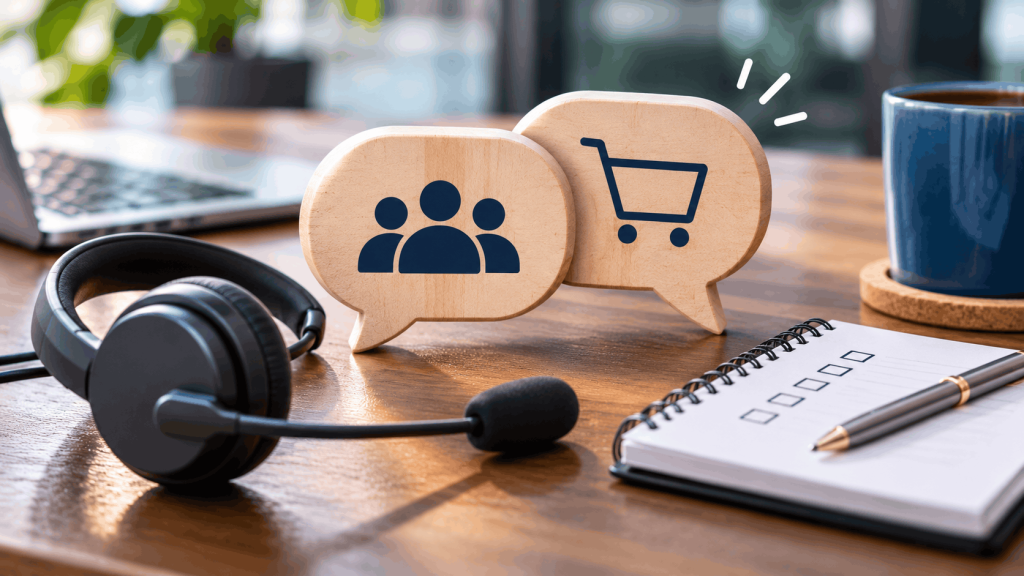
Are your sales conversations really keeping up with your buyers?
If your team is struggling to qualify informed prospects, explain value or handle objections consistently, it may be time to review their sales skills.
CTO delivers customised sales training built around your products, customers and real sales challenges. Tell us where your team needs support, and we’ll help you identify a suitable training program.
Which sales skills matter more when buyers arrive informed?
A buyer who has read the basics does not need a product tour. They need someone who understands their situation and can explain the value in their terms.
· Asking better questions.
Understanding what a customer needs through strategic questioning, rather than assumptions, is where a conversation earns its place.
· Qualifying with discipline.
Knowing which opportunities are worth pursuing, and which are not, protects your team’s time.
· Explaining value in the buyer’s terms.
Clear, specific language about outcomes lands better than a list of features.
· Handling objections honestly.
Buyers who have checked what you say will test it. Responding to the real concern behind an objection builds more trust than defending the surface statement.
· Staying consistent across the team.
Forrester research notes that sales teams may need to respond more quickly and consistently. A shared, structured approach helps every rep, not only the top performers.
· Following up well.
Managing the relationship between conversations keeps momentum once trust is built.
These are the skills at the centre of CTO’s sales training courses. The interpersonal skills underneath them, such as listening and rapport, are covered in our piece on why soft skills aren’t soft.
Is your sales team ready for more informed buyers?
AI-assisted research may change what customers expect from their first conversation with your team. Consider what happens when a prospect already knows your product features, has compared competitors and arrives with specific questions.
Can your salespeople
- Ask questions that uncover what the buyer still needs to know?
- Explain why your solution suits the buyer’s situation rather than repeating product features?
- Respond confidently when a prospect challenges pricing or compares competitors?
- Recognise genuine opportunities and avoid spending time on poorly qualified leads?
- Follow a consistent sales process without sounding scripted?
If your team struggles with these conversations, the issue may not be product knowledge. It may be the sales skills needed to turn informed enquiries into meaningful opportunities.
CTO’s customised sales training helps teams practise these skills using their own products, customer scenarios and common objections.
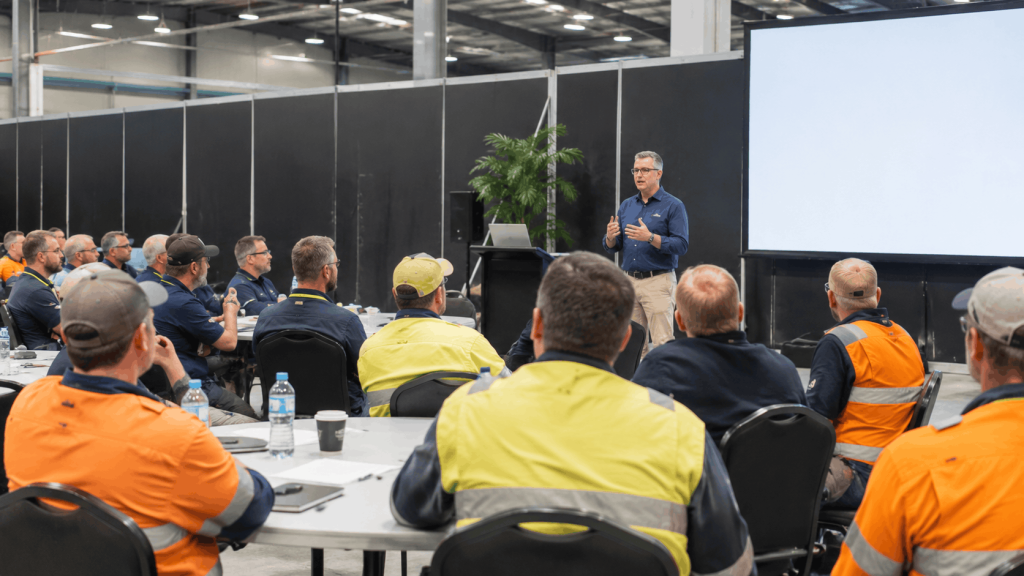
Which sales training suits your team?
CTO runs three sales programs. Each is customised to your product, your market and your team, and can be delivered onsite, online or as a hybrid.
| Challenge faced by the organisation | Relevant CTO program | Why it fits |
| Enquiries are coming in, but conversion is inconsistent | Prospecting to Closing | Develops qualification, questioning, objection handling, negotiation and closing |
| Phone enquiries are not progressing into sales conversations | Professional Selling over the Phone | Builds call structure, rapport, questioning and handling objections without face-to-face interaction |
| Results depend on a few strong salespeople | Sales Management: Build a Winning Sales Team | Develops coaching, performance management and consistent team practices |
All three programs suit groups of one to twenty, need no prerequisites and run from foundation to intermediate level.
Before any program, CTO works with a nominated contact to understand your team’s current performance, your product, your customers and the sales challenges you face. Scenarios, objections and role-plays are then built around your sales environment.
Participants leave with a toolkit for the program they attended. For Prospecting to Closing, follow-up coaching programs are available for teams who want to build on the two-day foundation. Sales managers can also combine their program with leadership and management training or Coaching for Development.
If your team is also working out how to use AI day to day, our Microsoft Copilot training covers prompt writing and using Copilot in Teams, Outlook, Word, Excel and PowerPoint.
When is training not the first fix?
Sales training works best when the basics around it are in place. If the offer is unclear, the lead sources are weak, or nobody reinforces new habits after the session, even excellent training will struggle to show results.
That is not a reason to wait. It is a reason to be open about the whole picture when you brief a provider.
What should you check before booking sales training?
- Which part of the sales process needs work: prospecting, qualifying, objections, closing or managing the team.
- Whether the content will use your product, your customers and the objections your team really hears.
- How much practice participants get, and whether it is built around your own scenarios.
- What they take away afterwards and what support is available.
- How you will judge whether it worked, agreed before the training starts
Frequently asked questions
Forrester research summarised by CustomerThink suggests 89% of B2B buyers now use generative AI as part of buying. Forrester also predicts AI agents will shape 75% of B2B purchase decisions by 2027. Buyers use AI to find suppliers and gather information, which is why sales training now focuses on questioning, qualifying and clear conversations.
Yes. Forrester expects buyers to talk to people twice as often to check what AI recommends, which suggests the conversation with a salesperson stays important. Sales training that builds questioning, listening and objection handling helps your team make the most of those conversations when they happen.
Effective corporate sales training covers the full sales process: prospecting, qualifying, questioning, presenting, handling objections, negotiating and closing. CTO’s two-day Prospecting to Closing program covers each stage using your own product, customers and objections, so participants practise with realistic scenarios rather than generic examples.
It depends on the program. CTO’s Prospecting to Closing sales training runs over two days, while Professional Selling over the Phone and Sales Management are each a full day. Content, scenarios and the mix of programs are customised to your team’s goals.
Yes. CTO delivers sales training courses onsite at your workplace, online or as a hybrid, so distributed teams can train together. Groups of one to twenty can take part, and every program is customised to your product, market and team, whichever format you choose.
Cost depends on the program, group size, delivery format and how much customisation your team needs. CTO provides a tailored quote after a conversation about your team and goals, because a two-day sales training program and a one-day program are not priced alike.
It can be. CTO’s Prospecting to Closing sales training runs from foundation to intermediate level, so it suits new starters and experienced sellers who want to sharpen and systematise their approach. Because the content is customised to your product and customers, it stays relevant regardless of your team’s experience.
The conversation still decides it
AI is changing how buyers find and check suppliers. It is not changing the fact that a buyer decides, in conversation, whether to trust you. The practical step is simple: look at the conversations your team has today and train the skills that matter most in them.
CTO is ranked among Australia’s Top 20 Corporate Training Providers for 2026, and delivers customised sales training onsite or online across Melbourne, Sydney, Brisbane, Perth, Adelaide and every other major Australian city.
Let’s map out the right sales training for your team